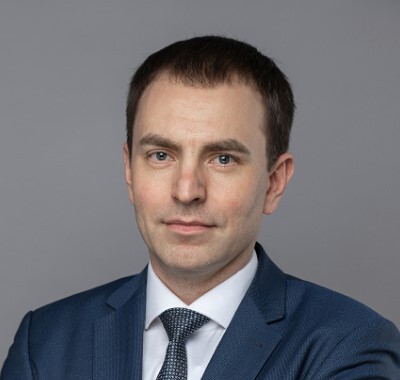
The year without federal co-financing became a test of maturity for both the regions and the developers. Netrika Medicine not only maintained its position in the public sector but also expanded its project portfolio through large enterprises and international partners. Andrey Dyukov, Commercial Director of Netrika Medicine, explains how the economics of projects have changed, why Belarus is transitioning to Russian standards, and where to look for new growth points.
How do you assess the current level of healthcare digitalization in Russia? What have the regions achieved in 2025 with the participation of your company?
The year 2025 became the final stage of the large-scale project to create a unified digital healthcare environment, summarizing the results of many years of work that began in 2021. The main focus was on completing the implementation of previously developed solutions, deepening the integration of regional information systems, and strengthening the connection between regional systems and federal services. Our company worked simultaneously in several directions, ensuring the practical implementation of these processes.
The year 2025 became the final stage of the large-scale project to create a unified digital healthcare environment, summarizing the results of many years of work that began in 2021. The main focus was on completing the implementation of previously developed solutions, deepening the integration of regional information systems, and strengthening the connection between regional systems and federal services. Our company worked simultaneously in several directions, ensuring the practical implementation of these processes.
What were the key areas of work for the company in 2025?
The company developed three key areas. The first is the public sector, including work on major regional projects and long-term cooperation with federal structures — the Federal Medical-Biological Agency of Russia (FMBA).
The second area is international projects. The key customer is the Republic of Belarus, where we participate in the formation of a unified digital healthcare environment and implement infrastructure solutions at the national level. In 2025 we successfully completed the second stage of the national project. In other countries we also implement and adapt components of the N3.Healthcare digital platform, which enriches our solution and brings new expertise to Russian projects. Projects in other countries are generally based on the most widely used international standard HL7 FHIR.
The third area is corporate and industrial healthcare. In 2025 we launched a cycle of projects in the field of corporate health, including the development of integrations with ERP and HR systems, the creation of analytics on employee health indicators and ratings, and the development of tools for corporate health management. Working with several leading enterprises, we have confirmed that we can deliver fast and effective results using our existing expertise and platform solutions. We believe that large-scale projects in industrial healthcare will fully reveal our potential.
The company developed three key areas. The first is the public sector, including work on major regional projects and long-term cooperation with federal structures — the Federal Medical-Biological Agency of Russia (FMBA).
The second area is international projects. The key customer is the Republic of Belarus, where we participate in the formation of a unified digital healthcare environment and implement infrastructure solutions at the national level. In 2025 we successfully completed the second stage of the national project. In other countries we also implement and adapt components of the N3.Healthcare digital platform, which enriches our solution and brings new expertise to Russian projects. Projects in other countries are generally based on the most widely used international standard HL7 FHIR.
The third area is corporate and industrial healthcare. In 2025 we launched a cycle of projects in the field of corporate health, including the development of integrations with ERP and HR systems, the creation of analytics on employee health indicators and ratings, and the development of tools for corporate health management. Working with several leading enterprises, we have confirmed that we can deliver fast and effective results using our existing expertise and platform solutions. We believe that large-scale projects in industrial healthcare will fully reveal our potential.
What key product and technological achievements would you highlight based on the results of the year?
The main achievement of the company in 2025 was the development of our own AI platform, integrated into a unified architecture of solutions. Unlike isolated modules, the platform is a practical tool used in real healthcare processes.
Within the platform several key services have been implemented: an AI assistant for data quality control, a NoSQL assistant for automatic reporting, an intelligent assistant for doctor appointment scheduling, and a technical support assistant.
The main achievement of the company in 2025 was the development of our own AI platform, integrated into a unified architecture of solutions. Unlike isolated modules, the platform is a practical tool used in real healthcare processes.
Within the platform several key services have been implemented: an AI assistant for data quality control, a NoSQL assistant for automatic reporting, an intelligent assistant for doctor appointment scheduling, and a technical support assistant.
How did the company’s financial dynamics change in 2025, given the absence of federal co-financing?
Financial dynamics were formed in fundamentally new conditions: federal co-financing was discontinued, while the tasks of developing digital healthcare remained unchanged and the expectations of patients, doctors, and healthcare authorities continued to grow.
Despite this, the regions continued to invest their own funds in digital transformation, which reflects the maturity and resilience of the market. Our financial results in this segment of the market remained generally at the same level as in 2024, which allows us to scale and further develop our regional projects.
Financial dynamics were formed in fundamentally new conditions: federal co-financing was discontinued, while the tasks of developing digital healthcare remained unchanged and the expectations of patients, doctors, and healthcare authorities continued to grow.
Despite this, the regions continued to invest their own funds in digital transformation, which reflects the maturity and resilience of the market. Our financial results in this segment of the market remained generally at the same level as in 2024, which allows us to scale and further develop our regional projects.
Has the company’s customer profile changed in 2025? If so, how?
The number of customers has increased. Previously we mainly worked with regional authorities and public medical organizations, but now large enterprises, insurance companies, and participants of the commercial healthcare sector are actively turning to us.
This became possible thanks to our expertise, which allows us to work at the intersection of public, departmental, and commercial healthcare. We provide comprehensive and scalable solutions covering all processes, making us a reliable partner for different segments of the market.
The number of customers has increased. Previously we mainly worked with regional authorities and public medical organizations, but now large enterprises, insurance companies, and participants of the commercial healthcare sector are actively turning to us.
This became possible thanks to our expertise, which allows us to work at the intersection of public, departmental, and commercial healthcare. We provide comprehensive and scalable solutions covering all processes, making us a reliable partner for different segments of the market.
How did the needs and requests of regional customers change during 2025?
Funding for government projects decreased, and regions became more selective in allocating resources, carefully prioritizing investments. In these conditions the company proved its value as a long-term partner: we provide solutions that quickly deliver practical benefits and significantly improve the speed and quality of implementing new services.
Funding for government projects decreased, and regions became more selective in allocating resources, carefully prioritizing investments. In these conditions the company proved its value as a long-term partner: we provide solutions that quickly deliver practical benefits and significantly improve the speed and quality of implementing new services.
Which international directions do you consider promising?
In 2025 we carried out extensive preparatory work for international expansion, establishing contacts in Africa, Asia, and Latin America, including Nigeria, Ghana, South Africa, Egypt, and India.
In 2025 the company successfully defended its plan to enter the Indian market as part of the St. Petersburg IT accelerator, which helped refine our product strategy and obtain recommendations for working with international customers.
Our international partners are attracted by our use of international standards such as HL7 FHIR, as well as our experience in implementing solutions in regions with large populations, such as Saint Petersburg and Krasnodar Territory. They are also interested in the completeness of our approach — from appointment scheduling and medical documentation to diagnostics, prescriptions, and digital communication channels between patients and doctors.
This systemic approach allows international customers to obtain a ready-to-scale solution that delivers rapid social impact. We are ready to enrich digital solutions in other countries with our own expertise while preserving their existing ecosystems through an integration-based approach.
In 2025 we carried out extensive preparatory work for international expansion, establishing contacts in Africa, Asia, and Latin America, including Nigeria, Ghana, South Africa, Egypt, and India.
In 2025 the company successfully defended its plan to enter the Indian market as part of the St. Petersburg IT accelerator, which helped refine our product strategy and obtain recommendations for working with international customers.
Our international partners are attracted by our use of international standards such as HL7 FHIR, as well as our experience in implementing solutions in regions with large populations, such as Saint Petersburg and Krasnodar Territory. They are also interested in the completeness of our approach — from appointment scheduling and medical documentation to diagnostics, prescriptions, and digital communication channels between patients and doctors.
This systemic approach allows international customers to obtain a ready-to-scale solution that delivers rapid social impact. We are ready to enrich digital solutions in other countries with our own expertise while preserving their existing ecosystems through an integration-based approach.
What goals does the company set for 2026?
In 2026 the company plans to continue developing all key directions. We will further expand and improve regional projects, which remain the most significant area of our work, and continue developing corporate healthcare, including joint initiatives with FMBA Russia and other federal agencies.
At the same time, we will strengthen our international presence in the CIS and beyond.
In 2026 the company plans to continue developing all key directions. We will further expand and improve regional projects, which remain the most significant area of our work, and continue developing corporate healthcare, including joint initiatives with FMBA Russia and other federal agencies.
At the same time, we will strengthen our international presence in the CIS and beyond.