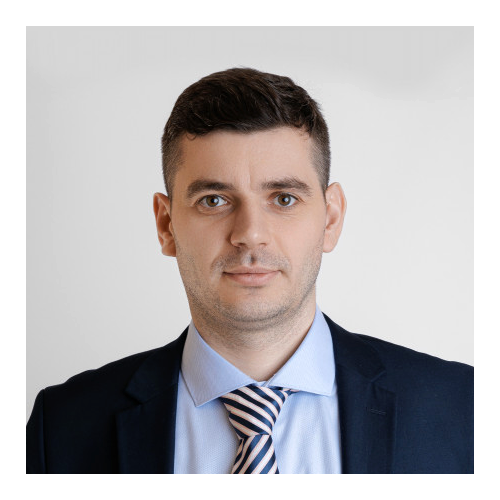
Andrey Korshunov, Head of Patient Services at Netrika Medicine, describes 2025 as a period of implementing strategic plans through import substitution and the development of solutions for the public sector, participation in federal initiatives, entry into the Belarusian market, and strengthening interaction with the commercial segment.
All these areas are interconnected: regional experience is used in federal and international projects, developments for government customers become the basis for B2B solutions, and new requests shape the product agenda for the coming years.
All these areas are interconnected: regional experience is used in federal and international projects, developments for government customers become the basis for B2B solutions, and new requests shape the product agenda for the coming years.
Import Substitution: Preserving Services and Updating Architecture
In Saint Petersburg, in 2025 we completed one of the largest stages of import substitution within the “Health of a Petersburg Resident” project: key services were developed further and new modules were introduced, including a patient identification service.
Currently, more than 2 million users are registered on the platform — their number has doubled since 2021.
Through their personal account, patients have access to 32 digital services, including several sub-services. One of the most popular features among users is the “Child’s Personal Account”, which allows parents to monitor children’s health indicators.
In the regions, within the framework of import substitution, many familiar patient services had to be significantly redesigned: regional portals, doctor appointment scheduling systems, call center operator workstations, queue management, and identification services.
At the same time, certification deadlines for regional solutions remained fixed. Existing user services had to be adapted to new requirements while preserving their functionality and familiar logic for patients.
In Saint Petersburg, in 2025 we completed one of the largest stages of import substitution within the “Health of a Petersburg Resident” project: key services were developed further and new modules were introduced, including a patient identification service.
Currently, more than 2 million users are registered on the platform — their number has doubled since 2021.
Through their personal account, patients have access to 32 digital services, including several sub-services. One of the most popular features among users is the “Child’s Personal Account”, which allows parents to monitor children’s health indicators.
In the regions, within the framework of import substitution, many familiar patient services had to be significantly redesigned: regional portals, doctor appointment scheduling systems, call center operator workstations, queue management, and identification services.
At the same time, certification deadlines for regional solutions remained fixed. Existing user services had to be adapted to new requirements while preserving their functionality and familiar logic for patients.
B2B Direction: Expanding Information Interaction with the Commercial Segment
Alongside government projects, we continued to develop the B2B direction.
In 2025, integration for doctor appointment scheduling was successfully implemented with several medical information systems used by commercial clinics, including the MIS of the Medscan Group.
This is an important step confirming the possibility of scaling our solutions to the private healthcare market.
Developers of MIS for commercial clinics show strong interest in our unified integration mechanisms.
The experience gained in 2025 forms the basis for the future development of patient flow management services: solutions developed within regional and international projects are now being transformed into product capabilities for B2B clients.
There is also significant potential in this direction through the development of our telemedicine solutions.
The new chat logic, tested in the Leningrad Region, brings interaction between patient and doctor closer to the familiar format of a messenger.
This technology will help meet the needs of private clinics for modern communication channels.
Alongside government projects, we continued to develop the B2B direction.
In 2025, integration for doctor appointment scheduling was successfully implemented with several medical information systems used by commercial clinics, including the MIS of the Medscan Group.
This is an important step confirming the possibility of scaling our solutions to the private healthcare market.
Developers of MIS for commercial clinics show strong interest in our unified integration mechanisms.
The experience gained in 2025 forms the basis for the future development of patient flow management services: solutions developed within regional and international projects are now being transformed into product capabilities for B2B clients.
There is also significant potential in this direction through the development of our telemedicine solutions.
The new chat logic, tested in the Leningrad Region, brings interaction between patient and doctor closer to the familiar format of a messenger.
This technology will help meet the needs of private clinics for modern communication channels.
Regions: From Telemedicine to Core Infrastructure
In the Leningrad Region, telemedicine became the key focus of 2025.
We significantly redesigned the standard solution: when submitting a request for a telemedicine consultation, a patient now has a separate chat with a doctor, essentially functioning like a messenger but within a secure medical environment.
The region also implemented a citizen request service as a separate product, as well as a unified deferred appointment journal, which prevents patients from being lost when there are no available appointment slots.
At the request of the customer, 24/7 monitoring of doctor appointment availability was also introduced. For the company, this is a new support format that has already proven its effectiveness.
In the Kamchatka Territory, a component of the N3.Healthcare platform for intelligent patient routing was successfully implemented.
It solves a key task: in real time it determines which medical district a patient is assigned to and which specialists the patient can consult.
The solution automates appointment scheduling: the system automatically directs the patient to the appropriate doctor, forms an electronic queue, and optimizes the workload of specialists.
This reduces waiting time and makes the process of receiving medical care simpler and more transparent.
The development of regional portals is one of the key directions of our product strategy.
We continuously expand their functionality, relying on the experience of successful implementations, including projects in the Rostov Region.
In the Leningrad Region, telemedicine became the key focus of 2025.
We significantly redesigned the standard solution: when submitting a request for a telemedicine consultation, a patient now has a separate chat with a doctor, essentially functioning like a messenger but within a secure medical environment.
The region also implemented a citizen request service as a separate product, as well as a unified deferred appointment journal, which prevents patients from being lost when there are no available appointment slots.
At the request of the customer, 24/7 monitoring of doctor appointment availability was also introduced. For the company, this is a new support format that has already proven its effectiveness.
In the Kamchatka Territory, a component of the N3.Healthcare platform for intelligent patient routing was successfully implemented.
It solves a key task: in real time it determines which medical district a patient is assigned to and which specialists the patient can consult.
The solution automates appointment scheduling: the system automatically directs the patient to the appropriate doctor, forms an electronic queue, and optimizes the workload of specialists.
This reduces waiting time and makes the process of receiving medical care simpler and more transparent.
The development of regional portals is one of the key directions of our product strategy.
We continuously expand their functionality, relying on the experience of successful implementations, including projects in the Rostov Region.
MAX Messenger: A New Channel for Medical Services
The year 2025 was also important in terms of developing new channels of interaction with patients.
Together with the MAX messenger team and regional authorities, we are building a model where medical services are delivered through the communication channels people already use.
We are integrating key healthcare services — doctor appointment scheduling and telemedicine consultations — with the national messenger MAX.
In Kuzbass, the appointment service has already passed verification and has been launched: residents can access it through the chatbot of the Kuzbass Ministry of Health in MAX — “Doctor Appointment in Kuzbass.”
Through MAX, a patient can receive consultations and schedule appointments: provide consent for personal data processing, select a medical organization, doctor, and appointment time — without leaving the messenger.
The launch of the service has produced a significant practical result: the monthly number of telemedicine consultations in Kuzbass has increased more than fourfold, confirming the demand for and effectiveness of digital patient interaction channels.
The doctor appointment scheduling service follows the same user scenario as on the Gosuslugi portal, but within a more familiar communication channel.
A telemedicine consultation is organized in a similar way: the doctor initiates the request from their working system, the patient receives a link and connects to a video consultation through MAX.
The doctor remains in their familiar interface, while the patient uses a convenient communication channel on a smartphone.
In the near future we plan to expand the available scenarios: notifications and reminders about appointments, further development of telemedicine services, and the possibility of signing medical documents and consents digitally.
The first medical institutions to implement this approach were in the Kemerovo Region.
Their experience became a growth point: the convenient format quickly gained recognition and began to scale rapidly.
While initially only a few regions showed interest, by December the service had been launched in many regions, including Krasnodar Territory, Rostov Region, Stavropol Territory, Saint Petersburg, Khabarovsk Territory, Kursk Region, and Zabaykalsky Territory.
The year 2025 was also important in terms of developing new channels of interaction with patients.
Together with the MAX messenger team and regional authorities, we are building a model where medical services are delivered through the communication channels people already use.
We are integrating key healthcare services — doctor appointment scheduling and telemedicine consultations — with the national messenger MAX.
In Kuzbass, the appointment service has already passed verification and has been launched: residents can access it through the chatbot of the Kuzbass Ministry of Health in MAX — “Doctor Appointment in Kuzbass.”
Through MAX, a patient can receive consultations and schedule appointments: provide consent for personal data processing, select a medical organization, doctor, and appointment time — without leaving the messenger.
The launch of the service has produced a significant practical result: the monthly number of telemedicine consultations in Kuzbass has increased more than fourfold, confirming the demand for and effectiveness of digital patient interaction channels.
The doctor appointment scheduling service follows the same user scenario as on the Gosuslugi portal, but within a more familiar communication channel.
A telemedicine consultation is organized in a similar way: the doctor initiates the request from their working system, the patient receives a link and connects to a video consultation through MAX.
The doctor remains in their familiar interface, while the patient uses a convenient communication channel on a smartphone.
In the near future we plan to expand the available scenarios: notifications and reminders about appointments, further development of telemedicine services, and the possibility of signing medical documents and consents digitally.
The first medical institutions to implement this approach were in the Kemerovo Region.
Their experience became a growth point: the convenient format quickly gained recognition and began to scale rapidly.
While initially only a few regions showed interest, by December the service had been launched in many regions, including Krasnodar Territory, Rostov Region, Stavropol Territory, Saint Petersburg, Khabarovsk Territory, Kursk Region, and Zabaykalsky Territory.
New Product Directions and Plans for 2026
Another direction is remote monitoring.
Regions are purchasing glucometers and blood pressure monitors, and the task of information systems is to automatically collect patient readings.
Integrations with such solutions presented to regional customers have received positive feedback.
Another key task is the development of regional data marts, which combine information about the population, doctors, medical services, and appointment schedules.
After a certain pause, work on this project has resumed with renewed intensity, as it has once again been included among the priority federal initiatives.
At the same time, products within the direction are expanding the use of AI-based digital assistants.
These assistants are integrated into telemedicine solutions and portals to visually highlight important data and simplify navigation within user scenarios.
Another direction is remote monitoring.
Regions are purchasing glucometers and blood pressure monitors, and the task of information systems is to automatically collect patient readings.
Integrations with such solutions presented to regional customers have received positive feedback.
Another key task is the development of regional data marts, which combine information about the population, doctors, medical services, and appointment schedules.
After a certain pause, work on this project has resumed with renewed intensity, as it has once again been included among the priority federal initiatives.
At the same time, products within the direction are expanding the use of AI-based digital assistants.
These assistants are integrated into telemedicine solutions and portals to visually highlight important data and simplify navigation within user scenarios.
Team
The implementation of all these projects became possible thanks to the team.
During the year, the workload for the direction increased significantly. The team reorganized its work so that this growth did not affect implementation timelines or quality.
Import substitution under tight deadlines, regional portals, the international portal in Belarus, integration with MAX — all of these projects were implemented simultaneously.
The year became a test of resilience and flexibility.
At the same time, the team not only managed the increased workload but also maintained stability: the staff composition remained almost unchanged and even expanded.
For us, this is one of the key results of the year and a reliable foundation that allows us to solve increasingly complex tasks.
In 2026, the company will continue developing the initiated directions: expanding service scenarios in the new messenger, bringing new products to market, and moving forward in international projects.
For regions and partners this means one simple thing: digital healthcare services for patients will become more accessible and easier to use.
The implementation of all these projects became possible thanks to the team.
During the year, the workload for the direction increased significantly. The team reorganized its work so that this growth did not affect implementation timelines or quality.
Import substitution under tight deadlines, regional portals, the international portal in Belarus, integration with MAX — all of these projects were implemented simultaneously.
The year became a test of resilience and flexibility.
At the same time, the team not only managed the increased workload but also maintained stability: the staff composition remained almost unchanged and even expanded.
For us, this is one of the key results of the year and a reliable foundation that allows us to solve increasingly complex tasks.
In 2026, the company will continue developing the initiated directions: expanding service scenarios in the new messenger, bringing new products to market, and moving forward in international projects.
For regions and partners this means one simple thing: digital healthcare services for patients will become more accessible and easier to use.